What happens to protein before it reaches your muscles?
Your gut and liver use amino acids too. Here is what that means for an ordinary meal and why protein is not simply 'lost' on the way to muscle.
 Arjun5 min read

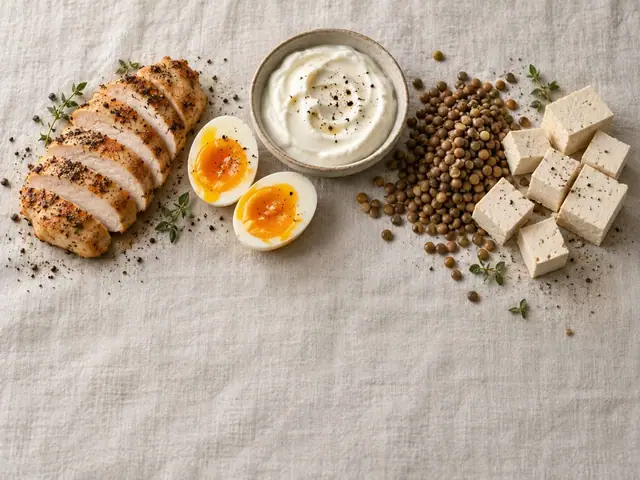
Say lunch is a lentil bowl, eggs on toast or chicken with rice. After digestion, the protein from that meal does not take a direct route to your muscles. The gut and liver receive its amino acids first and use some of them. Online, that step is sometimes described as protein being 'stolen' from your muscles. It is not: the gut and liver are living tissues that need amino acids too. The useful question is what a first-pass measurement can actually tell us about the rest of the body.
What first-pass extraction actually means
After digestion, amino acids from food enter the blood vessels draining the intestine and reach the liver. Researchers call the gut and liver together the splanchnic tissues. They can use amino acids to maintain their own proteins, make other compounds, or release amino acids into the wider circulation. The term extraction describes what is taken up on that first journey. It does not mean the amino acids vanished or that every one taken up can never support the rest of the body.
A classic tracer study of young and older men[1] makes the distinction concrete. The researchers followed labelled leucine, one amino acid, during a standardised meal in six younger and six older men. Their estimate of first-pass extraction averaged 23% in the younger group and 50% in the older group. That does not mean half the older men's lunch was wasted. The percentages describe leucine taken up by the gut and liver in that experiment; they are not a measure of all protein absorbed, or a personal rule to add 50% to dinner. The study was small, and both the amino acid and the method matter.
| Question | What it measures | What it cannot tell you |
|---|---|---|
| How much is absorbed? | Movement out of the digestive tract | The share used only by muscle |
| What is extracted first? | Uptake by gut and liver in a tracer model | A permanent loss from the body |
| How much muscle protein is made? | A response in sampled muscle over a set period | Long-term strength or muscle gain by itself |
Why protein type changes the curve
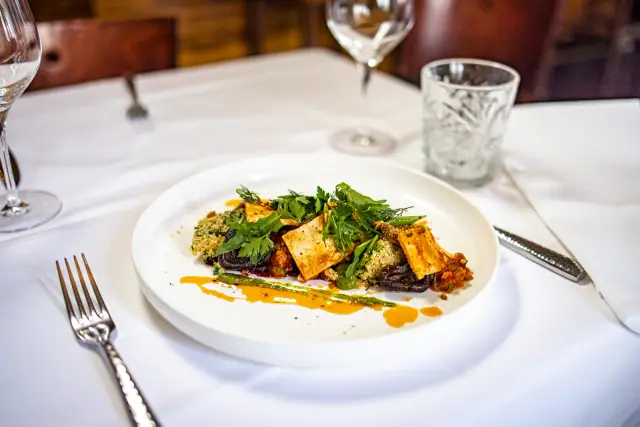
Protein foods do not all arrive in the bloodstream at the same speed. In the 1997 whey and casein experiment[2], the two milk proteins produced different patterns of amino acids in the blood and different short-term whole-body protein responses. This is a reason to avoid treating one laboratory curve as the fate of every dinner. A mixed meal with lentils, yoghurt or meat also includes other foods and may be eaten over a longer period.
Speed is not a simple contest in which the fastest protein always wins. The body continually makes and breaks down protein in many tissues. Studies can report muscle synthesis, whole-body balance or blood amino acids, and each answers a different question. If a chart does not tell you which outcome it measured, its apparent precision is not useful. Our protein-per-meal guide explains the difference between absorption and the short-term muscle response in more detail.
A large meal does not hit a hard ceiling
In a post-exercise experiment[3], a larger protein dose produced a longer and greater anabolic response than a smaller dose. It challenges the familiar claim that everything beyond one small serving is wasted. It does not show that an unlimited dose is better, nor does one laboratory day establish the best schedule for years of training. The question is how meals, total intake and training fit together over time.
A trial in older adults[4] found that total protein amount had a clearer effect on whole-body net protein balance than whether the day's intake was distributed evenly or unevenly. That is another reason to begin with the whole day rather than a rule about what happens in the first hour after lunch. The results concern the people and outcomes tested; they do not erase every reason to spread meals in a way you find comfortable.
What matters outside the tracer laboratory
A meta-analysis of resistance-training trials[5] found that adding protein helped muscle and strength gains on average, with diminishing returns as total intake rose. This is longer-term evidence than a single meal experiment. It still does not turn a population estimate into a prescription for someone with kidney disease, a restricted diet or a history of disordered eating. Training, enough overall food, sleep and an intake you can sustain belong in the same conversation.
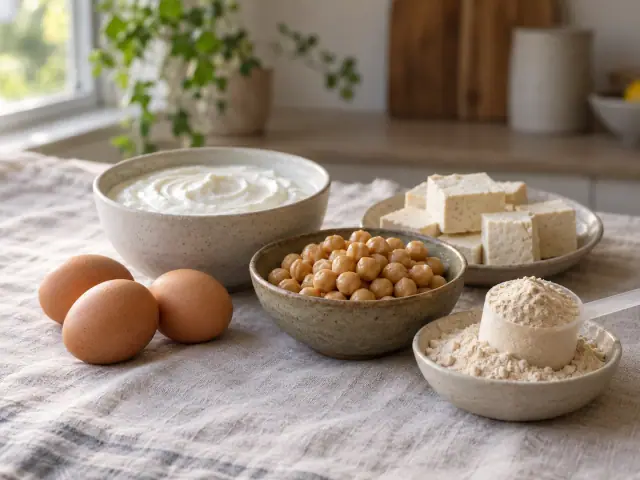
Consider a day that begins with tea and toast, has a small salad at lunch and ends with a protein-rich dinner. If you want to support training, the useful experiment is to put a familiar protein food into an earlier meal: yoghurt with breakfast, beans with lunch or tofu in a sandwich. That changes the pattern you can control. It does not require calculating how much leucine your liver used at noon. Our protein distribution article has meal examples if you want to look at the whole day. If your usual meals already work for you, a first-pass percentage is no reason to buy an extra shake.
When to ask for individual advice
Older adults with poor appetite, people recovering from illness, and anyone with a diagnosed condition may need more tailored guidance than a general sports article. A clinician or registered dietitian can consider medications, kidney function, weight changes and the foods you actually eat. Do not calculate a supplement dose by subtracting an extraction percentage from every meal. That is not how the studies were designed to be used.
For most readers, the next useful step is simpler. Write down a normal day's meals, identify the main protein food in each, and consider whether a change would make that pattern more dependable. There is no special trick for bypassing the gut and liver. They are part of the body you are feeding.
Try this week
0 of 3 doneSources
- Splanchnic and whole-body leucine kinetics in young and elderly men. American Journal of Clinical Nutrition.
- Slow and fast dietary proteins differently modulate postprandial protein accretion. PNAS.
- The anabolic response to protein ingestion during recovery from exercise. Cell Reports Medicine.
- Quantity of dietary protein intake, but not pattern of intake, affects net protein balance. American Journal of Physiology.
- Protein supplementation and resistance-training gains: systematic review. British Journal of Sports Medicine.
Pass it on
XBlueskyEmail