How much fibre do you need each day?
A practical guide to fibre targets, food-first swaps, and adding more without making your stomach miserable.
 Arjun5 min read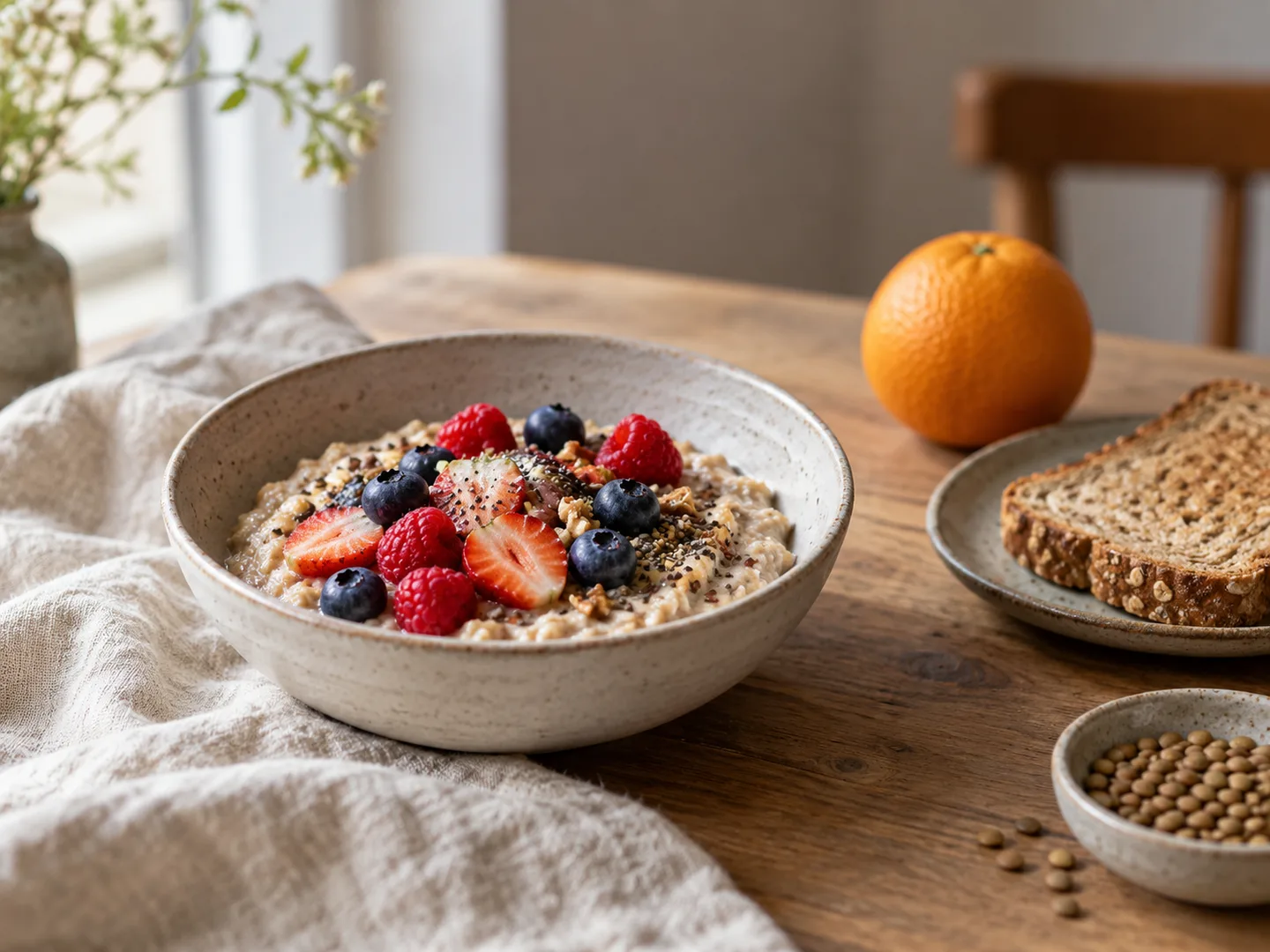
In this article
Suppose breakfast is toast, lunch is a sandwich, and dinner is rice with something on top. Nothing about that day looks unusual, yet it may be short on fibre. You do not need to weigh every bite to improve it. First, it helps to know what fibre is, what the common targets actually mean, and why a sudden leap from very little to a lot can feel unpleasant. This guide focuses on ordinary food and small changes you could keep.
What counts as fibre?
Fibre is the part of plant food that is not fully digested in the small intestine. Whole grains, beans, lentils, vegetables, fruit, nuts and seeds all contribute. Different foods contain different mixtures of fibres; they do not all behave identically in the gut. That is one reason a varied diet is more useful than trying to find one perfect cereal or supplement. The NHS recommends getting fibre from a variety of sources, alongside a balanced diet.
You may hear people divide fibre into soluble and insoluble types. The distinction can be useful, but it is not a shopping rule. Foods contain mixtures, and food labels usually give total fibre rather than a neat breakdown. Oats, pulses and fruit can all help, but so can a baked potato eaten with its skin or a slice of wholemeal bread. Start by noticing what is already on your plate; then look for a plant-food addition or a wholegrain swap. The nutrition-label guide can help when you are comparing packaged options.
How much is enough?
Targets vary by country and by the way fibre is measured. The NHS advises adults to aim for 30 g a day. NIDDK gives a range of 22 to 34 g for adults, depending on age and sex. Those figures are population guidance, not a reason to panic over a day that falls short. Children have different needs, and people following a clinician-prescribed diet should use their own care plan.
“Most of us need to eat more fibre and have fewer added sugars in our diet.”
At a glance
What a 30 g day can look like
Three example meals from the NHS fibre guide add up to just over its adult daily target. Portions and recipes change the numbers.
A useful way to read the number is as a direction for your usual pattern. One large salad cannot compensate for a week with almost no whole grains, pulses, fruit or vegetables. Likewise, missing a target on a busy day does not erase the benefit of the meals you normally eat. If you want to estimate your starting point, look at two or three typical days rather than a single unusually virtuous one. Food packaging sometimes lists grams of fibre per serving; portions and recipes change the total. There is no need to chase a perfectly exact count unless a professional has asked you to.
Why food variety matters
The benefit of a high-fibre eating pattern is not limited to bowel movements. The NHS describes an association between plenty of fibre and lower risk of heart disease, stroke, type 2 diabetes and bowel cancer. An association does not mean any one ingredient prevents a disease. Foods that supply fibre also bring other nutrients, and broader eating patterns matter. WHO's healthy-diet guidance emphasises vegetables, fruit, whole grains and pulses as part of a varied diet. Think of fibre as a useful marker of that pattern rather than a magic number you can buy in a tub.
Consider two ways of adding a few grams. One is a product advertised as high-fibre that you do not enjoy. The other is putting lentils into a familiar soup, choosing oats at breakfast twice a week, or keeping fruit where you can see it. The second approach may be easier to repeat because it attaches to a meal you already know. There is room for fortified foods and supplements when they are useful, but they are not a substitute for the range of foods a normal diet can provide. Our eat-healthier collection is built around similarly manageable changes.
Build it into meals you already eat
A good first swap is one you barely notice. If you eat bread, try a wholemeal or higher-fibre version that you like. If rice is your usual side, mix brown and white rice before deciding whether you want a full switch. If a sauce, curry or stew is already on the menu, add beans or lentils. Frozen vegetables count; so do canned beans after draining and rinsing. A skin-on potato, a piece of fruit, or a small handful of unsalted nuts can also fit without turning the day into a project. The NHS offers meal examples rather than insisting that everyone eat the same foods.
Breakfast is often an easy place to begin because it repeats. Porridge can be topped with fruit, or a familiar cereal can be mixed with a higher-fibre one while you adjust to the taste. At lunch, add a vegetable or fruit alongside the sandwich rather than replacing the whole meal. At dinner, let beans or vegetables share space with whatever protein you normally cook. None of these changes requires a label that says superfood. If cost is the obstacle, dried pulses, canned beans, oats and seasonal or frozen produce are often practical starting points; compare prices in your own shop rather than assuming one form is always cheapest.
Increase slowly and drink normally
Going from very little fibre to several large servings of beans and bran in a day can bring bloating or wind. NIDDK advises adding fibre a little at a time so the body gets used to it, and drinking enough liquids to help it work. You might change breakfast first, keep that for several days, then add a pulse-based lunch. There is no reward for rushing. If one food causes discomfort, try a smaller portion or a different source rather than concluding that all fibre is bad for you.
A fibre supplement can have a place when food changes are difficult or a clinician recommends one, but the type and dose matter. People with irritable bowel syndrome may react differently to particular foods; a generic push to eat more bran is not personalised care. If constipation is persistent, painful, new for you, or accompanied by blood in the stool, unintended weight loss or other concerning symptoms, seek medical advice. A registered dietitian can help if food restrictions or digestive symptoms make it hard to build a varied diet. Children, and anyone with a condition requiring a special diet, should not copy an adult target without advice.
A simple plan for this week
Choose one meal you eat often. Add one fibre-containing food to it or swap one ingredient for a wholegrain version. Repeat that change for several days before adding another. Keep water available as you normally would, and notice both comfort and convenience. If the change makes the meal less enjoyable, adjust it; the best plan is one you will still use after the novelty wears off. Use the target as a guide over time, not a scorecard at the end of every night. Variety, gradual change and meals you actually like will take you further than a single high-fibre day.
Sources
- How to get more fibre into your diet. NHS.
- Eating, Diet, & Nutrition for Constipation. National Institute of Diabetes and Digestive and Kidney Diseases.
- Healthy diet. World Health Organization.
Pass it on
XBlueskyEmail