Meal prep in an hour, without eating the same thing all week
A realistic prep session that makes several meals easier while keeping leftovers safe.
 Luca3 min read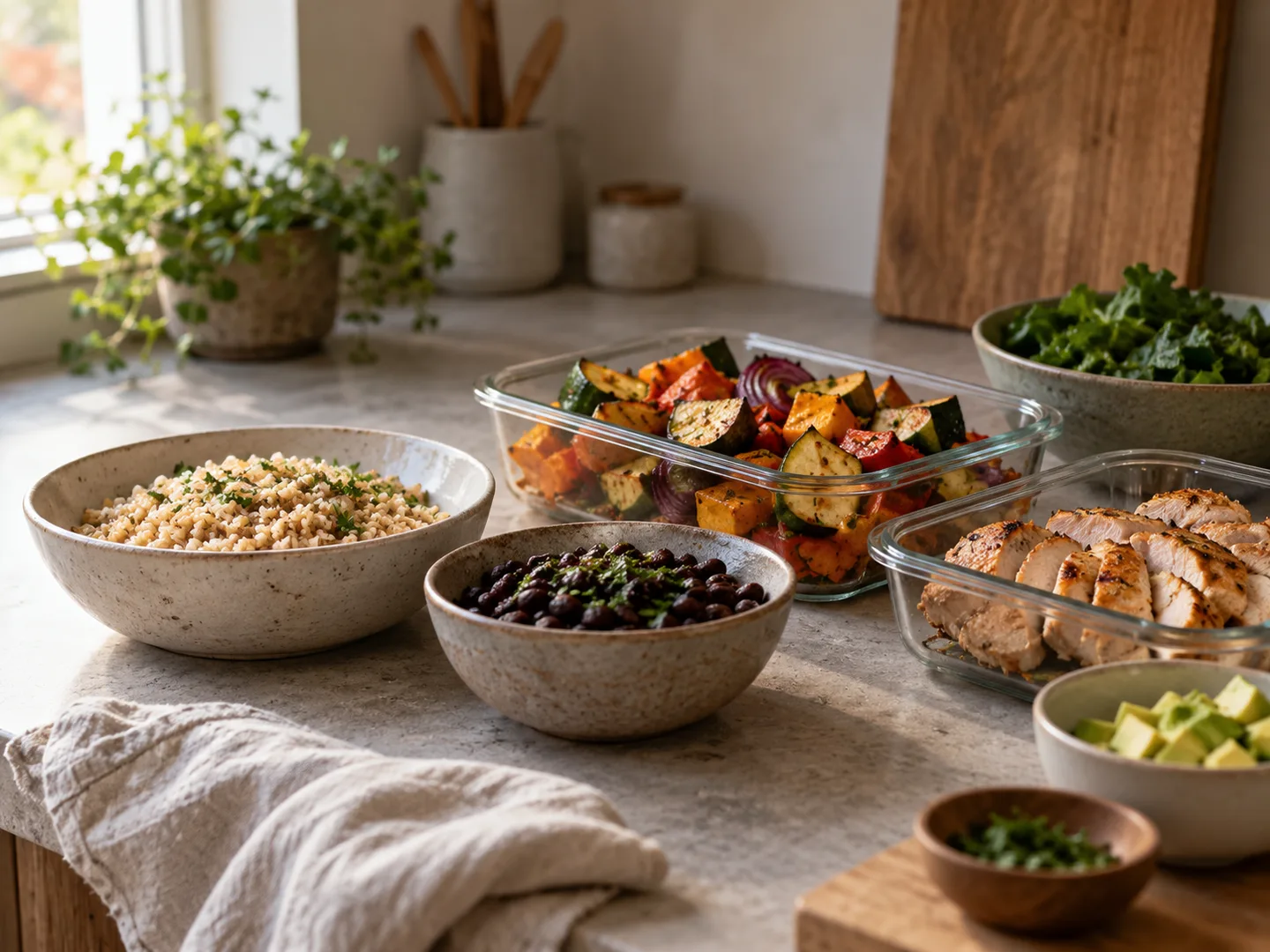
In this article
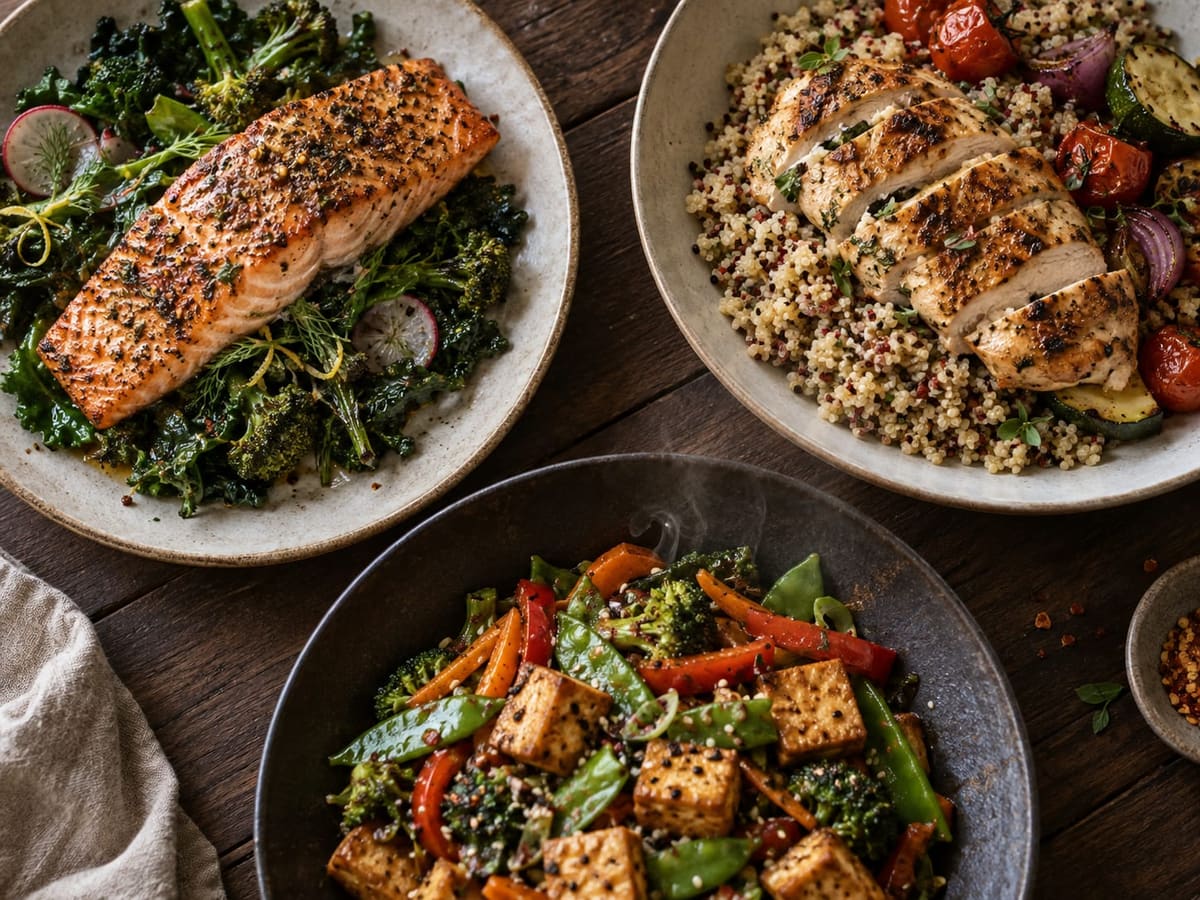
A row of seven identical containers looks efficient on a screen. By Thursday, it may look less appetising. Meal prep does not have to mean cooking every finished meal in advance. A more flexible hour can prepare a few components that work together in different ways: a grain or potato, a protein food, vegetables and a sauce. The rest of the week then becomes assembly rather than a new cooking project each night. The plan should fit your fridge, food-safety needs and appetite, not a photograph of somebody else's Sunday.
Choose components with more than one use
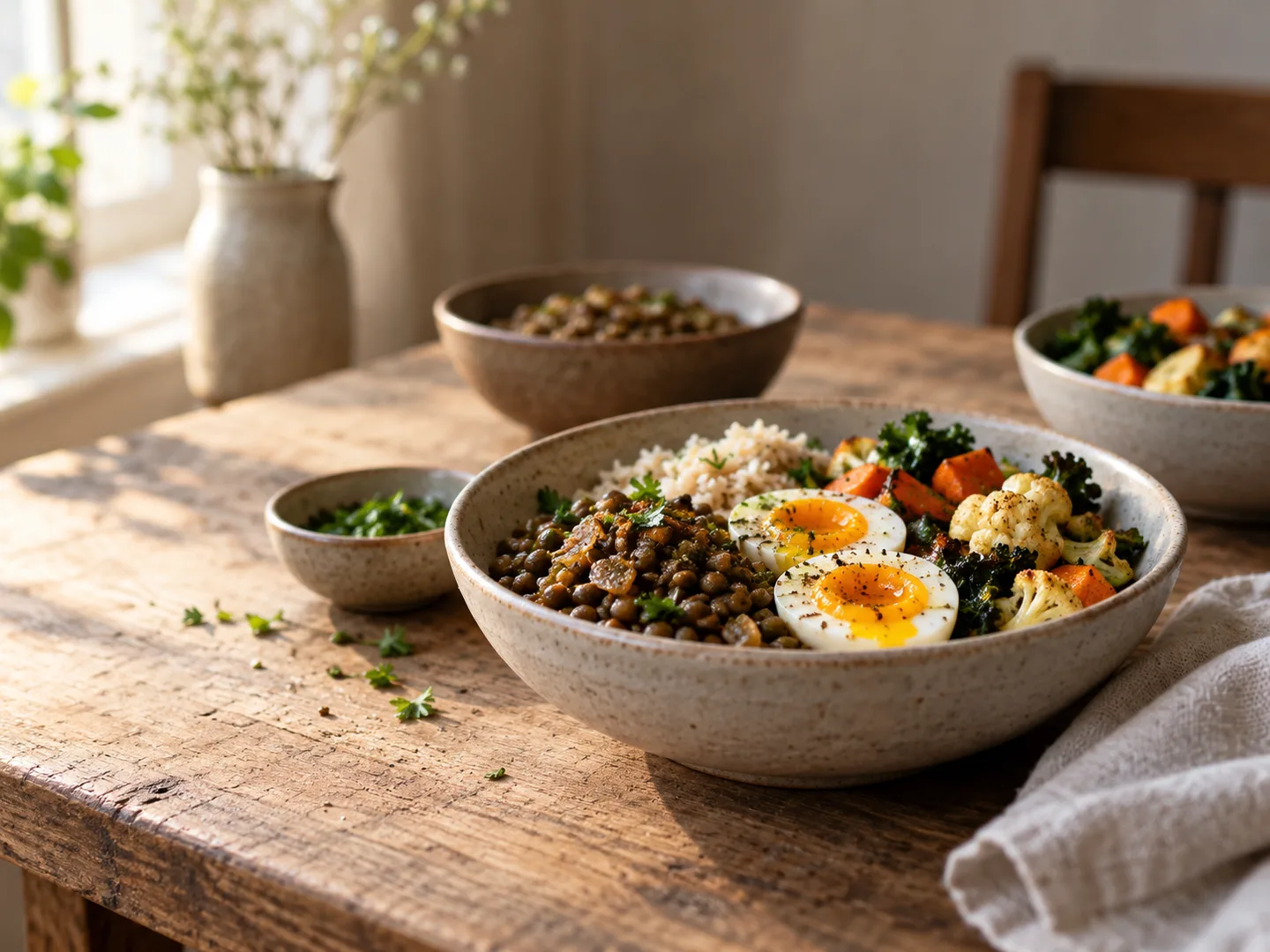
Begin by looking at the meals you already enjoy. Rice can sit under beans one night and beside chicken and vegetables another. A pot of lentils can become soup, a pasta sauce or a filling. Roasted vegetables can be eaten hot, folded into an omelette or added to a grain bowl. USDA MyPlate's savings guide suggests making a grain and preparing proteins and vegetables that can be mixed with pantry staples. The aim is fewer decisions, not seven perfect boxes.
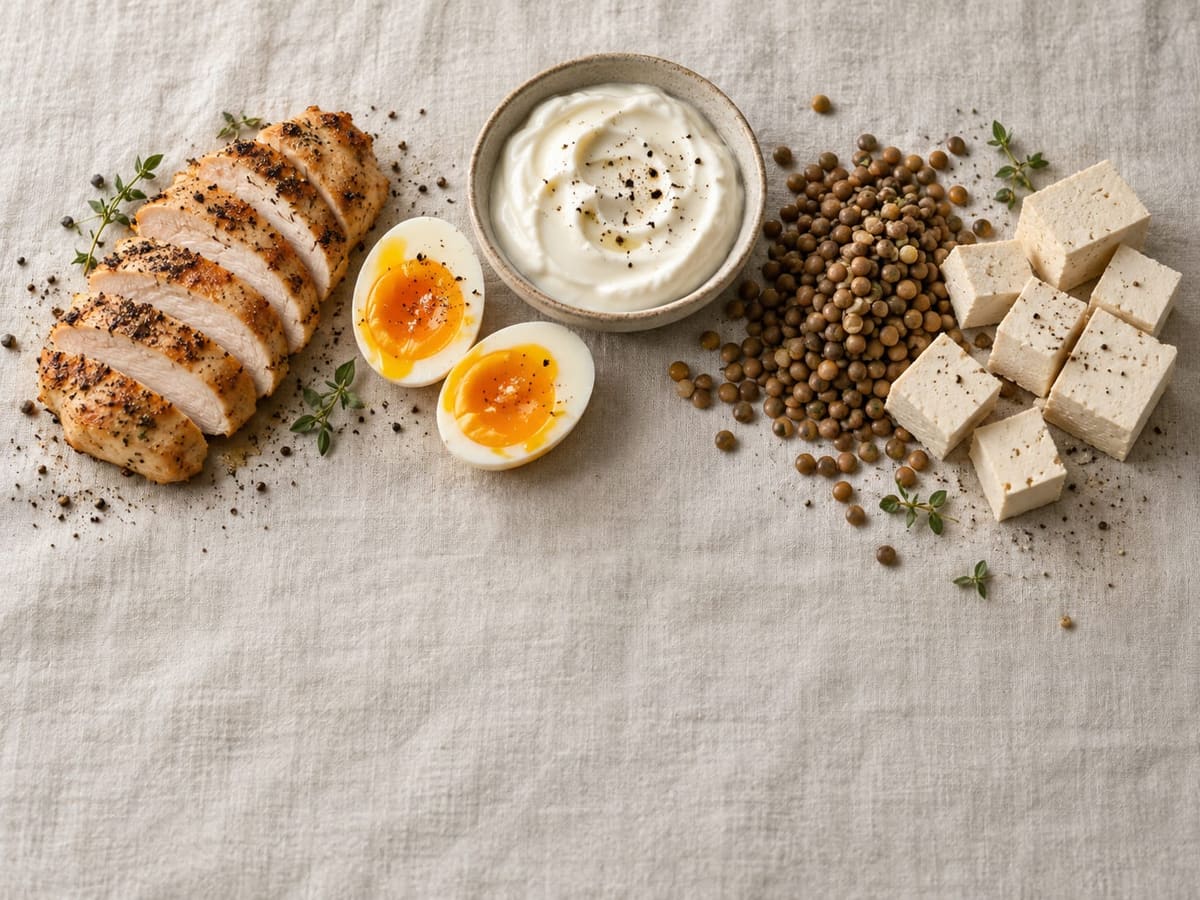
Pick two anchor meals before shopping. If one is a bowl and one is a wrap, you can often share several ingredients without making the dishes taste identical. A sauce, herb or crunchy topping changes the result. Use our budget-protein guide to choose foods that fit local prices. The cheapest plan is not the one with the longest ingredient list; it is the one that uses what you purchase. Frozen and canned vegetables can cover days when fresh produce runs out.
A practical sixty-minute session
First, clear a safe workspace and start the component with the longest cooking time. While it cooks, wash or chop vegetables and prepare a protein source. Use a timer and follow the package or recipe directions for raw foods. Next, mix a simple sauce and set aside ready-to-eat toppings. Finally, portion only what you expect to eat soon, leaving ingredients separate when that keeps them fresher. This is a workflow, not a rigid recipe; a tiny kitchen may call for smaller batches. Our fast-dinner ideas can use the same prepared parts.
Do not try to multitask beyond what you can safely manage. If an hour is too much, prep one component: cook rice, boil eggs or wash produce. That still removes friction from a later meal. If you do not have a reliable fridge or freezer, choose shelf-stable preparations and cook smaller amounts. A good prep habit starts at the size your home can support. It should make the week easier, not leave you exhausted before it begins.
Keep leftovers safe
Food safety is part of meal prep. FoodSafety.gov's cold-storage chart gives roughly three to four refrigerated days for many cooked leftovers when the fridge is at 4°C or below. Follow specific guidance for your ingredients, cool and refrigerate prepared food promptly, and freeze portions you will not eat within the safe window. FoodSafety.gov also advises prompt refrigeration rather than leaving cooked food out for hours. Reheat thoroughly according to the food and recipe guidance.
A weekly plan should therefore not rely on Sunday chicken sitting in the fridge until Saturday. Freeze later portions or cook another small batch midweek. Label containers with the preparation date if it helps. People who are pregnant, older, immunocompromised or otherwise at higher risk from foodborne illness should be particularly careful and follow their clinician's guidance where relevant. If food looks or smells wrong, do not taste it to test safety; discard it. A convenient meal is not worth a preventable illness.
Make next week easier
Choose two meals you want to eat, write down the components they share and reserve one hour—or thirty minutes if that is realistic. Prepare the longest-lasting parts first, cool and store them safely, and leave room for fresh assembly. After the week, note what you used and what you threw away. Change the plan accordingly. Successful prep is not a full fridge; it is less friction when you are hungry. Keep the parts you enjoy and let the rest of the system stay simple.
If you share a kitchen, agree on shelf space and labels before filling every container. If you cook only for yourself, a small batch may be more practical than a family-sized recipe. The method should reduce decisions without taking away the pleasure of a fresh meal when you have time to make one.
Sources
- Planning for Savings: Leftover Edition. USDA MyPlate.
- Cold Food Storage Chart. FoodSafety.gov.
- Food Safety and Eating Out. FoodSafety.gov.
Pass it on
XBlueskyEmail