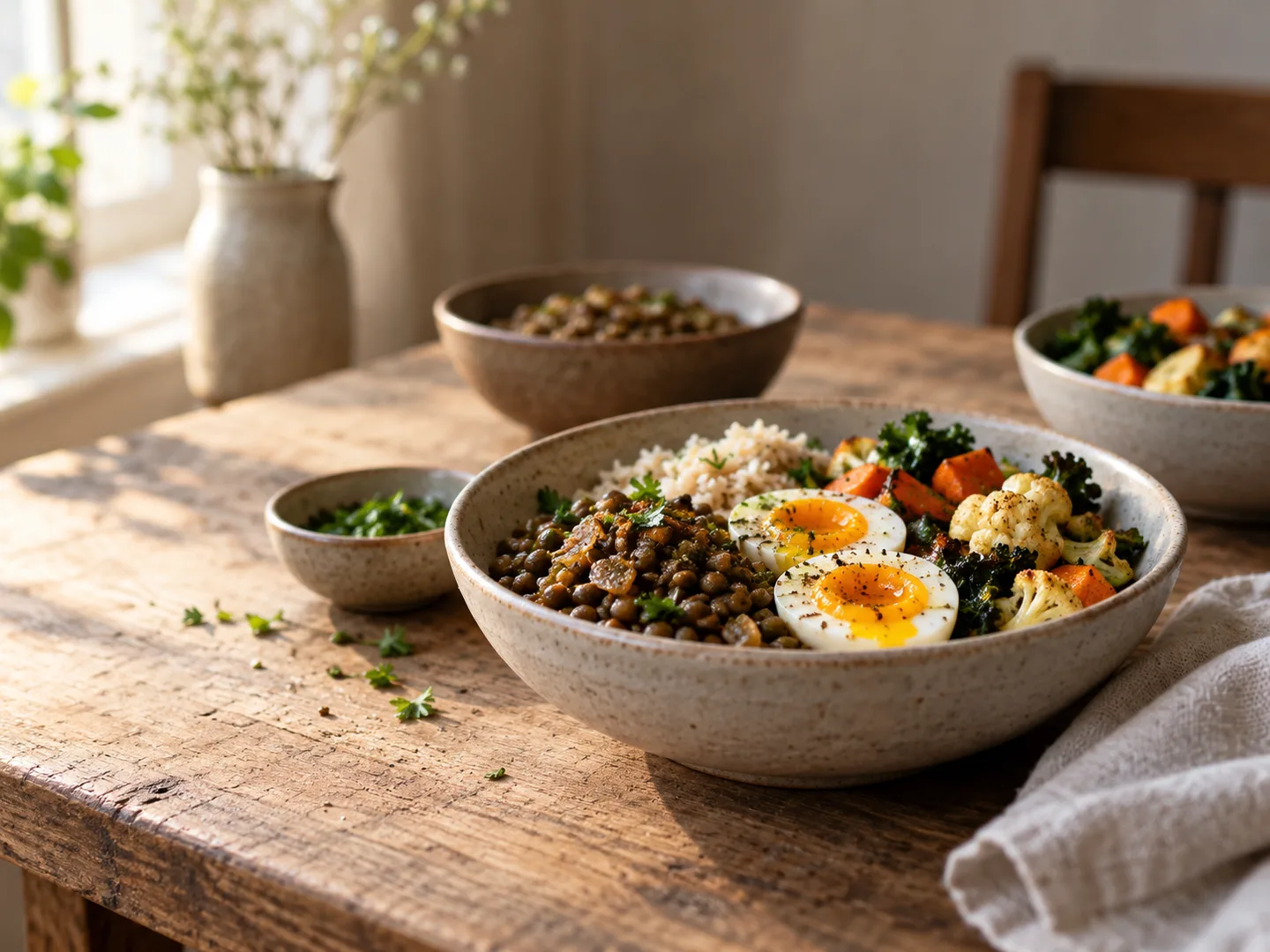
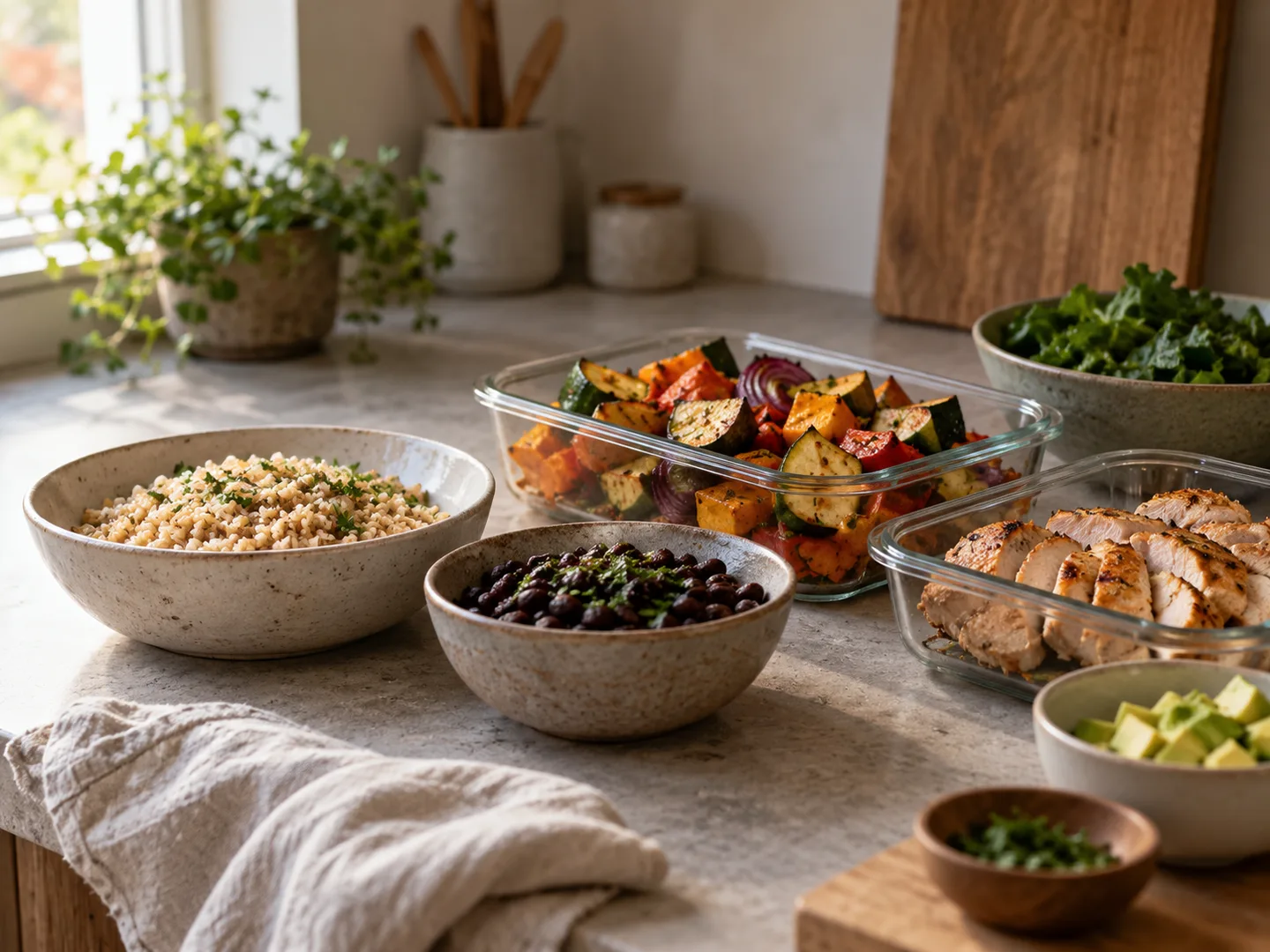
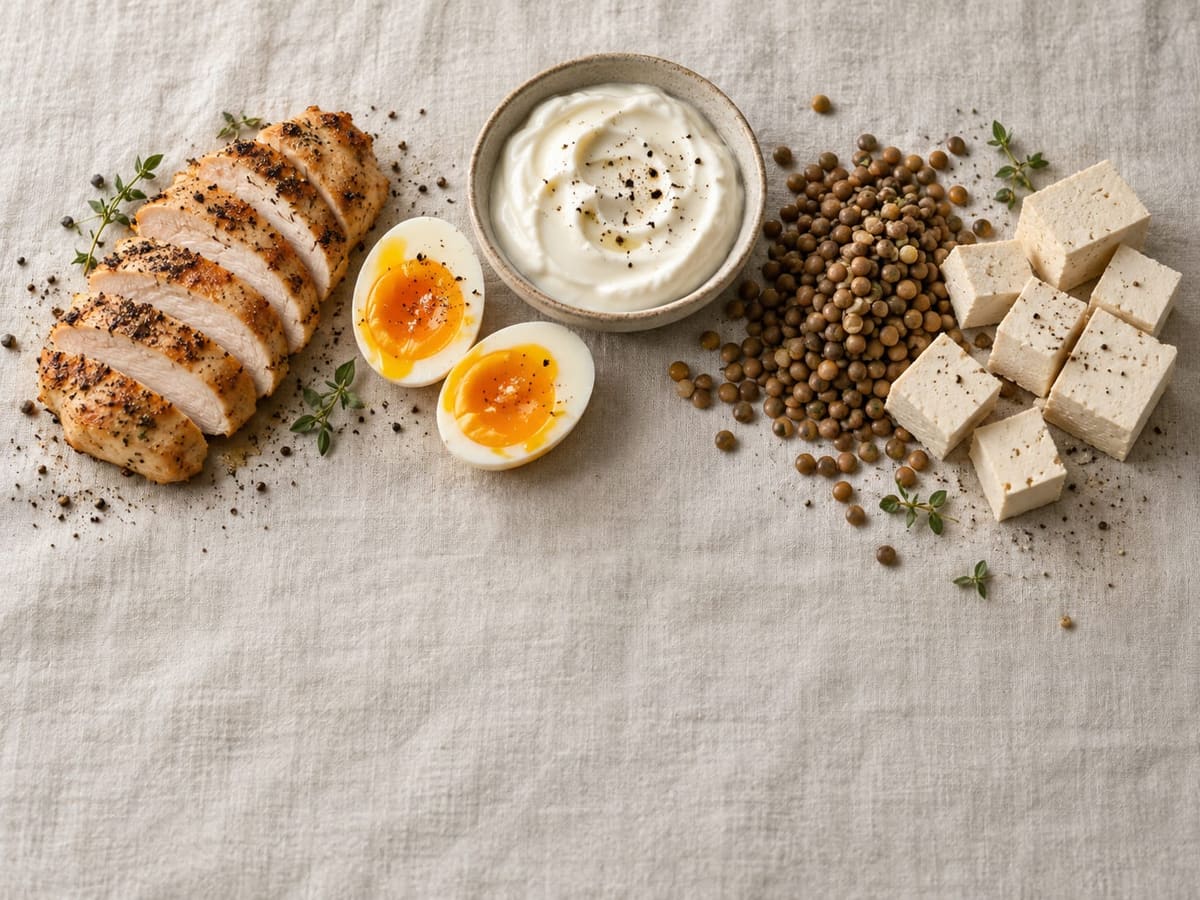
Nine fast high-protein dinners for busy nights
Flexible meals built from fridge, freezer and pantry shortcuts, with no special equipment.

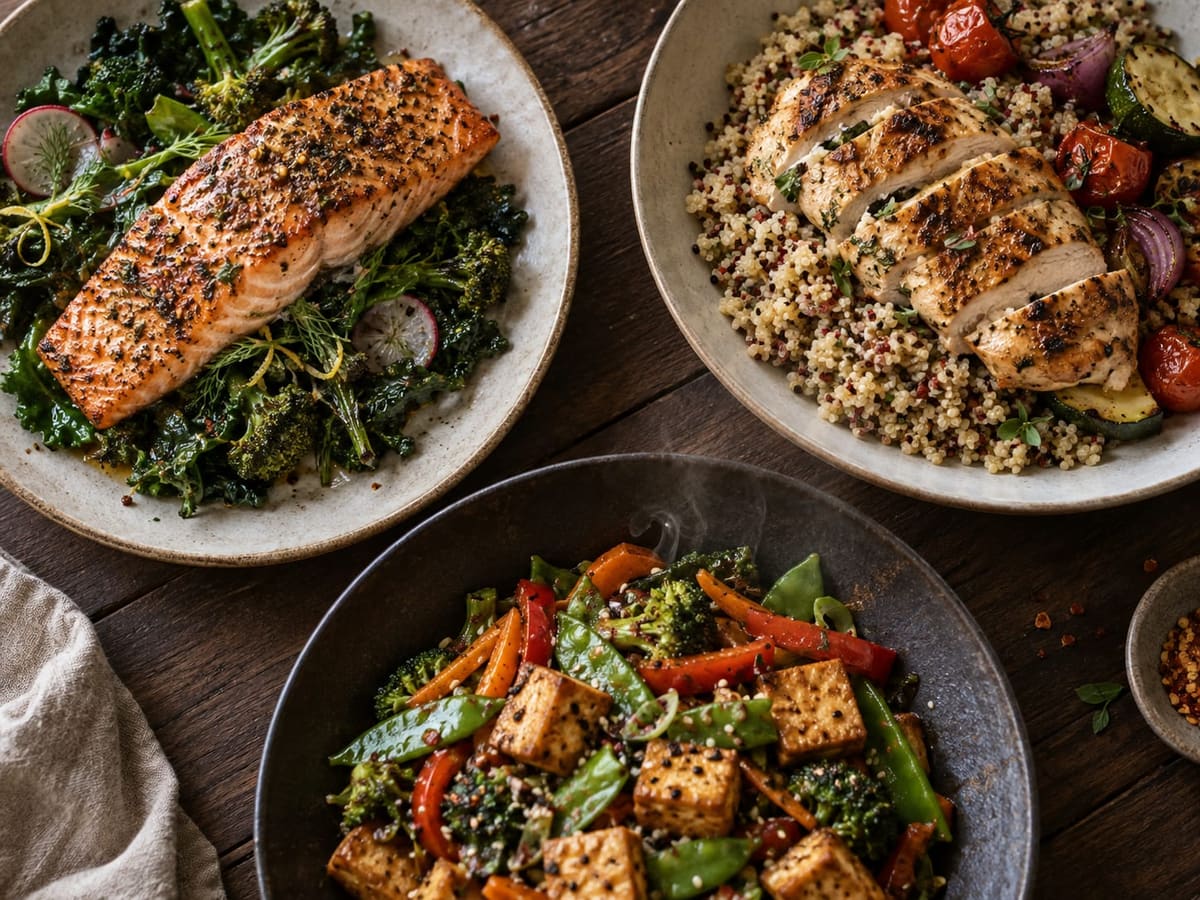
In this article
The usual problem with dinner is not knowledge. It is that at seven in the evening you have little energy left, nothing is defrosted, and the recipe you bookmarked wants a long marinade. These nine ideas use familiar protein foods and convenient staples. The time depends on your ingredients, equipment and preparation; food safety matters more than a stopwatch.
There is no elaborate batch cooking here. Some ideas use ready-cooked foods; others take longer if you begin with raw meat or fish. Check package instructions and cook thoroughly rather than forcing every meal into exactly fifteen minutes.
Stock the shortcuts first
Quick cooking is partly a shopping problem. A few safe, convenient foods in the cupboard and freezer make these dinners easier to assemble, though some planning is still useful.
- Tinned: tuna, chickpeas, butter beans, chopped tomatoes, coconut milk.
- Freezer: peas, spinach, edamame, sliced bread, and protein foods you can thaw and cook safely according to the package.
- Fridge: eggs, Greek yoghurt, halloumi, feta, mature cheddar.
- Fast carbohydrate: microwave rice, rice noodles, couscous, tortillas, gnocchi.
- Flavour, so nothing tastes like diet food: garlic paste, harissa, soy sauce, miso, curry paste, lemons, a jar of chilli crisp.
Five things from a single pan
These are one-pan ideas. Portions, cooking times and protein amounts depend on the ingredients you choose.
- Harissa chicken and couscous. Warm fully cooked chicken with harissa according to its package directions. Prepare couscous separately, then add yoghurt and lemon. If using raw chicken, allow enough time to cook it safely.
- Prawn and tomato rice. Simmer tinned tomatoes with garlic paste, add cooked prawns and heat through according to the package; fold in heated rice and peas. Raw or frozen uncooked prawns need their own full cooking instructions.
- Miso salmon with greens. Use a ready-cooked salmon fillet or allow the time needed to cook a raw one safely. Serve with wilted spinach, rice and a little miso dressing.
- Egg fried rice with edamame. Scramble eggs until cooked, add heated rice and cooked edamame, then season with soy and chilli crisp. Use freshly cooked or safely stored rice.
- Chickpea and spinach curry. Simmer a drained tin of chickpeas and frozen spinach in a sauce of curry paste and coconut milk. Add yoghurt or nuts if you enjoy them, and serve with bread or rice.
Four with almost no cooking
- Tuna, bean and red onion salad. Combine tinned tuna, butter beans, lemon, olive oil, parsley and black pepper. Adjust the portions to your appetite and follow advice about fish consumption where relevant.
- Halloumi and grain bowl. Cook halloumi according to the package while ready-to-heat grains warm, then add cucumber, tomato and a yoghurt-and-lemon dressing.
- Loaded tortillas. Warm tortillas, then fill with cottage cheese or safely stored ready-cooked chicken, tinned sweetcorn, pickled jalapenos and hot sauce.
- Greek yoghurt savoury bowl. Use plain Greek yoghurt as a base, topped with warmed chickpeas, cucumber, dill and olive oil. It sounds unusual but makes a satisfying contrast of textures.
The pattern underneath all nine
Once you have made a few of these, you stop needing recipes. Every one of them is the same four-part structure: a fast protein, a carbohydrate that needs heating rather than cooking, something green from the freezer or the salad drawer, and one assertive sauce to stop it tasting like components. Swap any part for an equivalent and the dinner still works.
- Fast protein: eggs, prawns, tinned fish, mini fillets, halloumi, tinned pulses, Greek yoghurt.
- Fast carbohydrate: microwave rice or grains, couscous, rice noodles, gnocchi, tortillas, bread.
- Green thing: frozen peas, spinach, edamame, broccoli, or raw cucumber and tomato if nothing needs cooking.
- Sauce: anything with salt, acid, fat and heat. Yoghurt and lemon, soy and sesame, harissa and oil, chilli crisp.
Protein content varies with brand, portion and preparation, so none of these ideas has one honest number without a complete ingredient list. If you need a precise amount for a medical or training reason, calculate it from the foods you actually use. Chickpea curry, edamame rice and bean salad can be adapted for a plant-based diet. Choose portions that satisfy you and fit your needs rather than copying someone else's serving exactly.
The shortcut should still be a real dinner
USDA MyPlate lists many protein-food options, including eggs, pulses, fish, soy foods and poultry. That variety makes a fast dinner possible without an expensive product. Pair a protein source with a vegetable and a grain or other starch you enjoy. MyPlate's time-saving planning guide suggests keeping freezer and pantry foods ready so meals do not depend on a fresh shopping trip. Fifteen minutes is an assembly target, not proof that every ingredient starts raw.
Use pre-cooked and canned foods according to their storage instructions, and cook raw meat or fish safely rather than racing a clock. Our one-hour prep guide shows how a short earlier session can support several different meals, while our budget protein guide helps compare the cost of shortcuts. If a dinner takes twenty minutes because you needed to wash vegetables or help a child, it has not failed. It is still a useful dinner.
Sources
- Protein Foods Group. USDA MyPlate.
- Planning for Healthy Eating and Savings: Time-Saving. USDA MyPlate.
- Cold Food Storage Chart. FoodSafety.gov.
Pass it on
XBlueskyEmail