Gut Microbiome & Fiber Diversity: Beyond the 30-Plant Rule
Plant variety is a useful direction, not a weekly exam. Explore what the research found and how to add variety without upsetting your gut or budget.
 Mei5 min read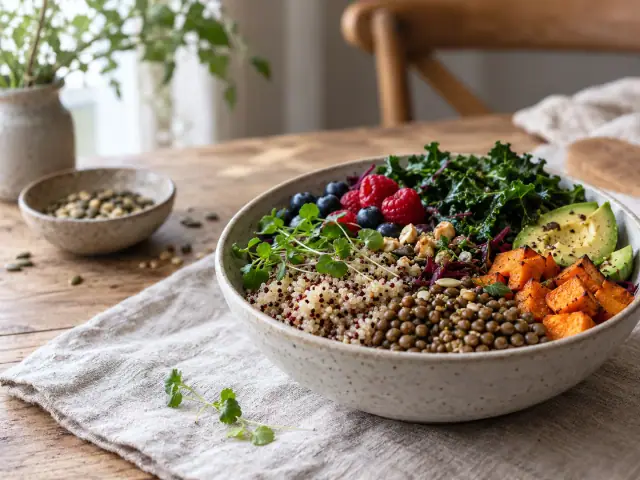
A weekly plant checklist can make dinner feel like a game: oats, chickpeas, tomatoes, another tick. That can be enjoyable until a busy Thursday turns the game into homework. The idea of eating thirty different plants a week has a recognisable research origin, but it is often presented with more certainty than that research allows. You do not fail your gut by stopping at twenty-nine, and sprinkling tiny amounts of many herbs is not a substitute for eating enough food. The better question is how variety and fibre can work together in meals you can afford and tolerate.
Where the number came from
The American Gut study published in 2018 examined a self-selected citizen-science cohort. People reporting more than thirty plant types per week had different microbiome features, including greater diversity, compared with those reporting ten or fewer. This was an association based on reported habits, not a randomised trial assigning people a precise plant quota. Other differences between participants could contribute. The findings are interesting, but they do not identify thirty as a biological switch or show that adding a final ingredient prevents disease.
A number is easy to share, which is partly why it travels further than the study design. Yet the practical message survives without pretending the number is exact: if your meals rely on a narrow set of ingredients, there may be enjoyable ways to broaden them. Think of the target as an optional prompt. Someone who likes counting can use a list; someone who finds it stressful can rotate a few familiar foods. Neither method needs to be described as a personalised microbiome treatment.
Variety does not replace fibre
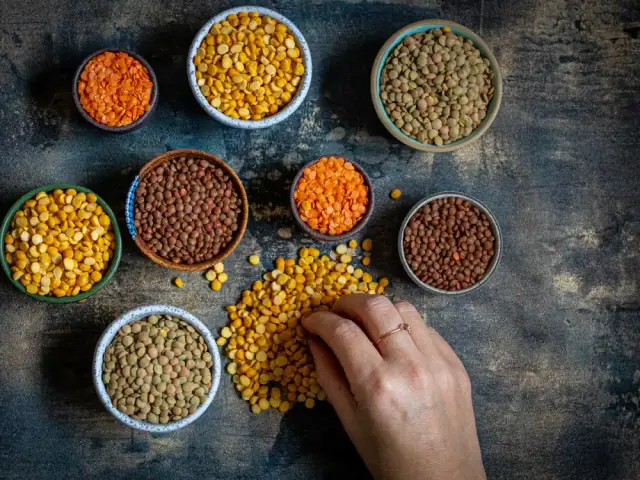
The NHS recommends about 30 grams of fibre daily for adults, from a range of foods. That is a quantity target, not the same as thirty different plants in a week. A teaspoon of several seasonings adds variety but cannot automatically provide the fibre of substantial servings of pulses, whole grains, vegetables and fruit. Conversely, repeating beans or oats still contributes fibre. There is no reason to throw away a useful staple simply because you already counted it on Monday.
It helps to keep two simple questions separate: did I include meaningful portions of fibre-containing foods, and did I enjoy some variety across the week? Neither question requires a perfect spreadsheet. A bowl of lentil soup eaten twice may be more useful to your routine than an expensive collection of ingredients that spoil. You can preserve the soup and vary the accompaniment: wholemeal bread one day, a different vegetable another. Our gut-health collection offers related reading, and the budget-friendly collection keeps practical cost in view.
What an intervention study adds
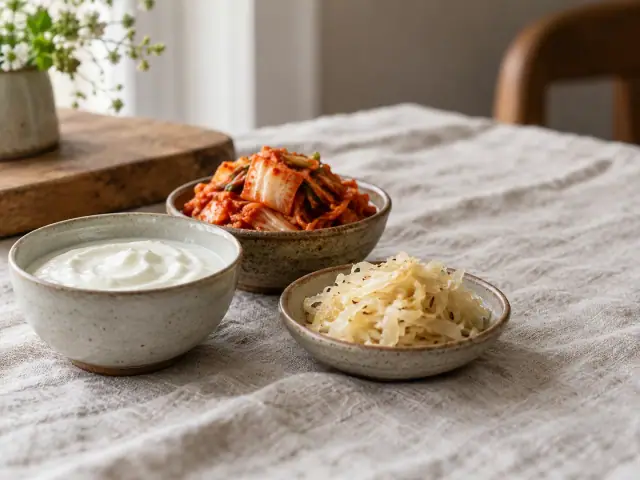
A 2021 trial comparing high-fibre and fermented-food diets found different responses between the groups. Fermented-food intake increased microbiota diversity; increasing fibre did not produce the same group-level diversity change over the study period. Participants' responses also varied. This is a useful correction to the claim that more fibre necessarily produces an immediate increase in every microbiome measure. It does not show that fibre lacks value, or establish that everyone should replace fibre foods with fermented products.
Microbes perform many jobs, and a stool sample captures only part of a complicated system. Counting microbial types is not the same as measuring whether you feel well, meet your nutritional needs or have a diagnosed digestive condition. Be cautious with claims that one snack will repair your gut or that a consumer test supplies a definitive shopping list. Ask what outcome a study actually measured, in whom, and for how long. A change in a laboratory marker can motivate further research without being a ready-made treatment plan.
| Usual meal | One possible change | Keep it manageable |
|---|---|---|
| Porridge | Alternate fruit or add seeds | Use small amounts you enjoy; no need for many toppings |
| Rice and curry | Rotate lentils, chickpeas or vegetables | Keep a familiar base and change one ingredient |
| Pasta | Add a tolerated pulse or vegetable | Frozen and tinned ingredients are practical options |
| Soup | Use a different grain or wholemeal bread alongside | Repeat leftovers rather than wasting them |
When more is not immediately better
The NIDDK guidance for irritable bowel syndrome notes that soluble fibre can help some people and recommends increasing fibre gradually to reduce gas and bloating. It also describes a low-FODMAP approach that may be appropriate with professional guidance. A person managing IBS should not feel obliged to eat a long list of triggering foods to satisfy an online challenge. Symptom management and adequate nutrition take priority over a social-media target.
Make one change at a time if your digestion is sensitive. For instance, start with a smaller portion of a familiar pulse rather than adding beans, bran, a new fermented drink and several raw vegetables on the same day. If everything changes at once, it becomes harder to identify what agrees with you. Record the meal and how you felt without assuming every symptom proves an ingredient is harmful. Persistent or troubling digestive symptoms deserve assessment; endless restriction is not a reliable substitute for finding the cause.
A realistic shopping plan
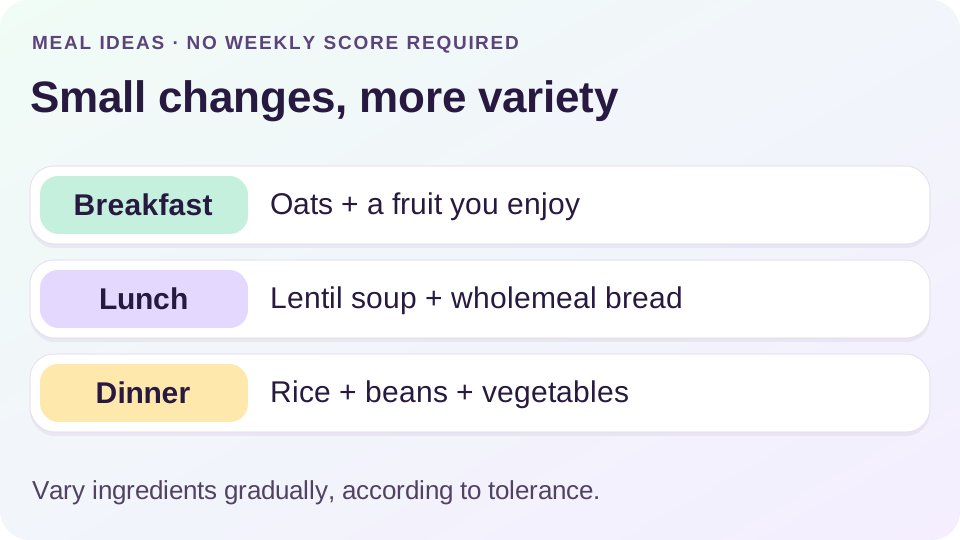
Begin with what is already in the cupboard. Write down the grains, pulses, vegetables, fruit, nuts and seeds you actually eat, then look for an easy gap. You might alternate rice with oats at another meal, buy a mixed bag of frozen vegetables, or use a different tinned bean next time. Choose ingredients that fit several meals. A bag of carrots can work in soup, a tray bake and a lunchbox; a novelty ingredient used once may be less helpful despite adding a tick.
If you enjoy counting, decide on a consistent personal method and keep it light. The point is noticing variety, not arguing over whether different colours of the same vegetable deserve separate entries. Do not assign a supposed therapeutic value to each tick. A practical weekly plan might include your regular breakfast, two dinners that make leftovers, and one optional new ingredient. That is a planning example, not a research-tested formula. It leaves space for family preferences and ordinary days when convenience matters most.
The strongest reason to improve your routine is broader than a diversity score. A large review of carbohydrate quality links higher fibre and whole-grain intake with favourable health outcomes across multiple lines of evidence. This supports building fibre-containing foods into an overall pattern. It does not mean a plant checklist can measure those outcomes for an individual. Keep the useful habit, loosen the scorekeeping, and let enjoyment and tolerance determine which additions are worth repeating.
Try this week
0 of 3 doneSources
- American Gut: an Open Platform for Citizen Science Microbiome Research. mSystems, 2018.
- Gut-microbiota-targeted diets modulate human immune status. Cell, 2021.
- How to get more fibre into your diet. NHS.
- Eating, Diet, & Nutrition for Irritable Bowel Syndrome. NIDDK.
- Carbohydrate quality and human health. The Lancet, 2019.
Pass it on
XBlueskyEmail