Are fermented foods good for your gut?
Yoghurt, kefir, kimchi and kombucha have different stories. Here is what the evidence can and cannot tell you.
 Mei3 min read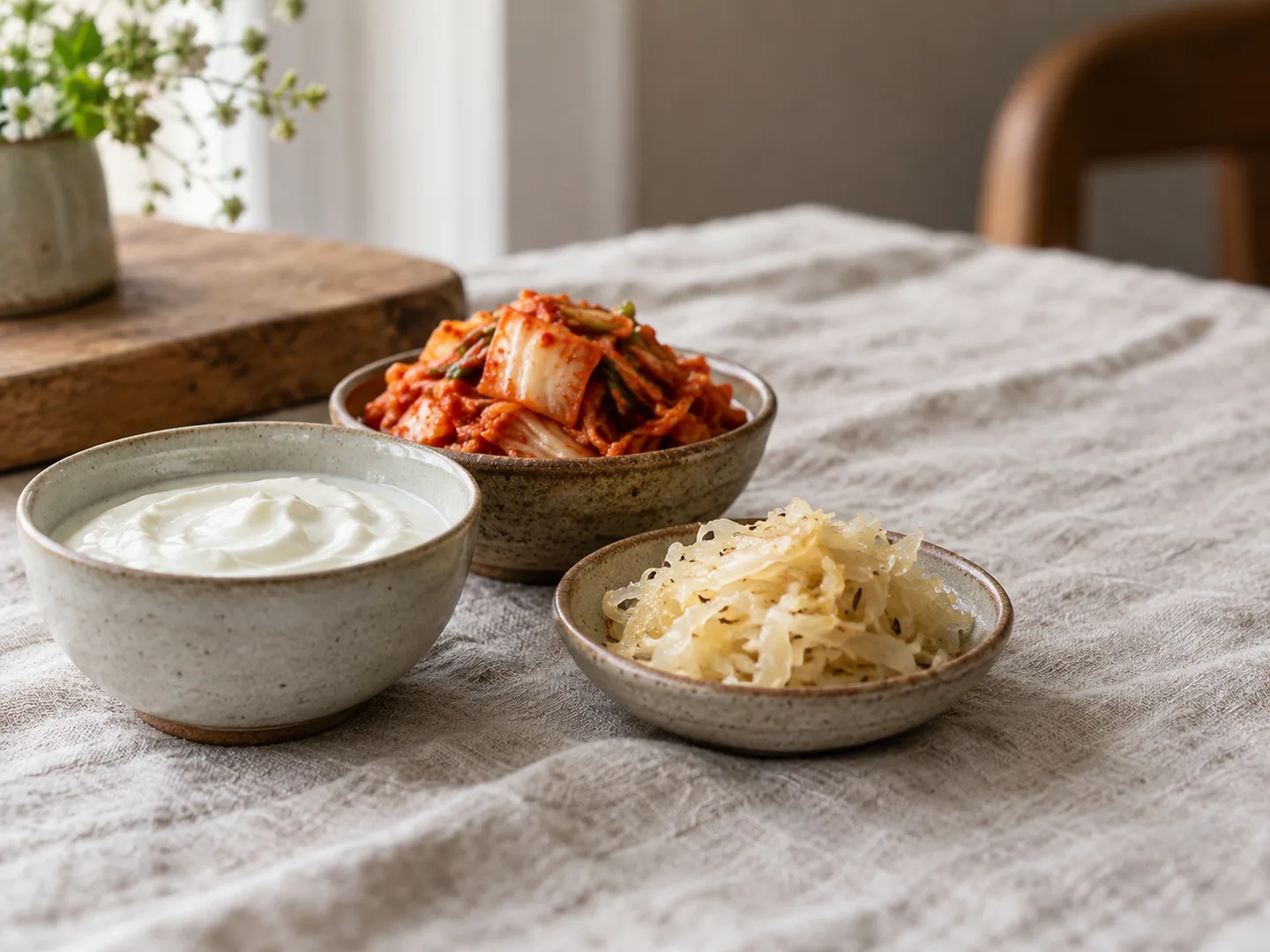
In this article
A fridge shelf can now look like a gut-health pharmacy: live yoghurt, kefir, kimchi and bottles of kombucha all promise something different. Fermentation is a way microbes change a food. It can produce interesting flavours and textures, but fermented is not a guarantee of a proven health effect. Some products contain live organisms when you eat them; others are heated after fermentation, and recipes vary widely. The question is not whether these foods are good or bad as a group. It is what you enjoy, tolerate and can reasonably expect.
Fermented does not always mean probiotic
A probiotic is a live microorganism that has been shown to provide a benefit when given in an adequate amount. That definition requires evidence for a particular organism and use. The NIH Office of Dietary Supplements explains that some fermented foods contain live microorganisms, but not all labelled probiotic products have proven benefits. A bacteria name on a tub also does not tell you whether it is the strain studied for a specific outcome. That is why a headline about one supplement cannot be applied to every jar of pickles.
Plain yoghurt can be a convenient food with protein and calcium. Kimchi or sauerkraut may add flavour and vegetables to a meal. Kefir is a drink some people enjoy. None of them needs a cure claim to earn a place on your table. Check the ingredient list for things relevant to you, such as added sugar, salt, milk or alcohol. Kombucha, in particular, is a different product from yoghurt; do not treat them as interchangeable doses of the same microbe. Our microbiome explainer gives more context for why one food cannot reset a complex ecosystem.
What the health evidence can say
Research on probiotics varies by strain, condition and dose. NCCIH notes some evidence for selected uses, but also says strong evidence for most conditions is lacking. The result is not a simple yes-or-no verdict on fermented foods. A clinical trial using a named capsule cannot answer whether every fermented food improves digestion. Conversely, uncertainty about a medical effect does not make a nutritious, enjoyable food worthless. Judge the food as food first, and be sceptical of claims that promise to treat a named disease.
If you have gut discomfort, buying more live-culture products may not answer the cause. Lactose, spice, acidity, portion size and other ingredients can affect tolerance. Keep changes small and pay attention to the whole meal. Persistent pain, bleeding, unexpected weight loss or substantial bowel changes need assessment rather than a supplement experiment. Our fibre guide covers one well-established way to improve dietary variety, while also explaining why increasing too quickly can feel uncomfortable.
Safety and sensible shopping
People who are severely ill or immunocompromised should ask their care team before taking probiotic supplements or making major changes involving live-culture products. NCCIH discusses limited long-term safety data and greater risks for some vulnerable groups. Home fermentation also requires reliable food-safety instructions; a social-media recipe is not a substitute for safe preparation and storage. If you purchase a product, use it according to the label and store it appropriately. More is not automatically better.
A useful shopping question is: would I still eat this if the label made no gut-health promise? If you like plain yoghurt with fruit, that is an easy choice. If kimchi adds flavour to a meal, enjoy it. If an expensive drink tastes unpleasant and strains your budget, there is no evidence-based reason to force it into your week. Nutrition is a pattern of many foods and circumstances. An isolated fermented product cannot compensate for a diet that lacks enough food, fibre or variety.
Try one food, without the pressure
If you are curious, pick one fermented food you already find appealing. Use a normal serving in a familiar meal, and see whether you like the taste and how you feel. Do not add four new products at once and then try to diagnose your gut from the result. If you have a medical condition or troublesome symptoms, speak to a healthcare professional. A useful food does not need to be a miracle food. Let taste, tolerance, price and the rest of your diet guide the decision.
Sources
- Probiotics: Health Professional Fact Sheet. NIH Office of Dietary Supplements.
- 5 Things To Know About Probiotics. NCCIH.
- Probiotics: Usefulness and Safety. NCCIH.
Pass it on
XBlueskyEmail