Oatmeal is not making you gain weight
What actually changes the number is the pour, the syrup and the granola.

In this article
Porridge has had an odd few years. It spent a decade as the sensible breakfast, then got reclassified by parts of the internet as a blood-sugar disaster that keeps people fat. Both positions are overstated, and the reason is simpler than either: plain oats are a fairly ordinary, fairly filling bowl of carbohydrate, and almost everything interesting about a bowl of porridge is what you add to it.
Dry oats are only one part of the finished bowl. The amount you pour and the additions—milk, fruit, yoghurt, nuts, syrup or granola—change its energy and how satisfying it feels. That is not a reason to fear toppings. It is a reason to look at the meal you actually eat instead of blaming the oats alone.
Where the calories actually come from
Measure a normal weekday bowl and the arithmetic becomes obvious. A generous pour of oats instead of a weighed portion adds perhaps a hundred calories. Whole milk instead of water adds a similar amount again. A spoon of honey or maple syrup, which in practice is rarely a level spoon, adds around sixty. A handful of granola on top for texture can add two hundred on its own, because granola is oats that have already been baked in oil and sugar. Nut butter is excellent food and also the densest thing on most kitchen shelves.
- Oats, 40 g: roughly 150 calories.
- The same oats poured by eye: frequently 60 to 70 g, so 220 to 260.
- 250 ml whole milk rather than water: adds about 160.
- A rounded tablespoon of syrup or honey: about 60 to 70.
- A tablespoon of peanut butter: about 95.
- A small handful of granola: often 180 to 220.
Stack the upper end of that list and you have a 700-calorie breakfast that still gets described as just porridge. Nobody is being dishonest. The pour is simply invisible in a way that a second slice of toast is not.
The blood sugar argument, honestly
Oats do raise blood glucose, as any starchy food does, and more finely processed oats raise it faster. Instant oats generally produce a quicker, higher rise than rolled oats, which in turn beat steel-cut. The effect is real and measurable. What is less well supported is the leap from that to porridge making you gain weight. For people without diabetes, a moderate post-breakfast glucose rise is a normal physiological event, and the continuous-monitor graphs circulating online are usually showing ordinary responses framed as alarming ones.
What does matter for most people is how long the breakfast keeps them going. Oats carry beta-glucan, a soluble fibre that thickens in the gut, slows gastric emptying and has reasonably consistent evidence behind modest reductions in LDL cholesterol. That same property is why a bowl of porridge tends to hold better than the same calories of cereal. If yours does not, the fix is usually protein rather than abandoning the oats.
Making the bowl work harder
Plain porridge is mostly carbohydrate, and some people find it more satisfying with a protein-containing addition such as yoghurt, milk or nuts. Others are content with it as it is or eat protein later. There is no fixed gram amount that every breakfast must reach. Choose additions that suit your appetite, taste and medical needs.
- Cook the oats in milk, or stir a scoop of plain whey or soya protein in once the pan is off the heat so it does not go claggy.
- Spoon in 150 g of Greek yoghurt or skyr at the end, which also cools the bowl down.
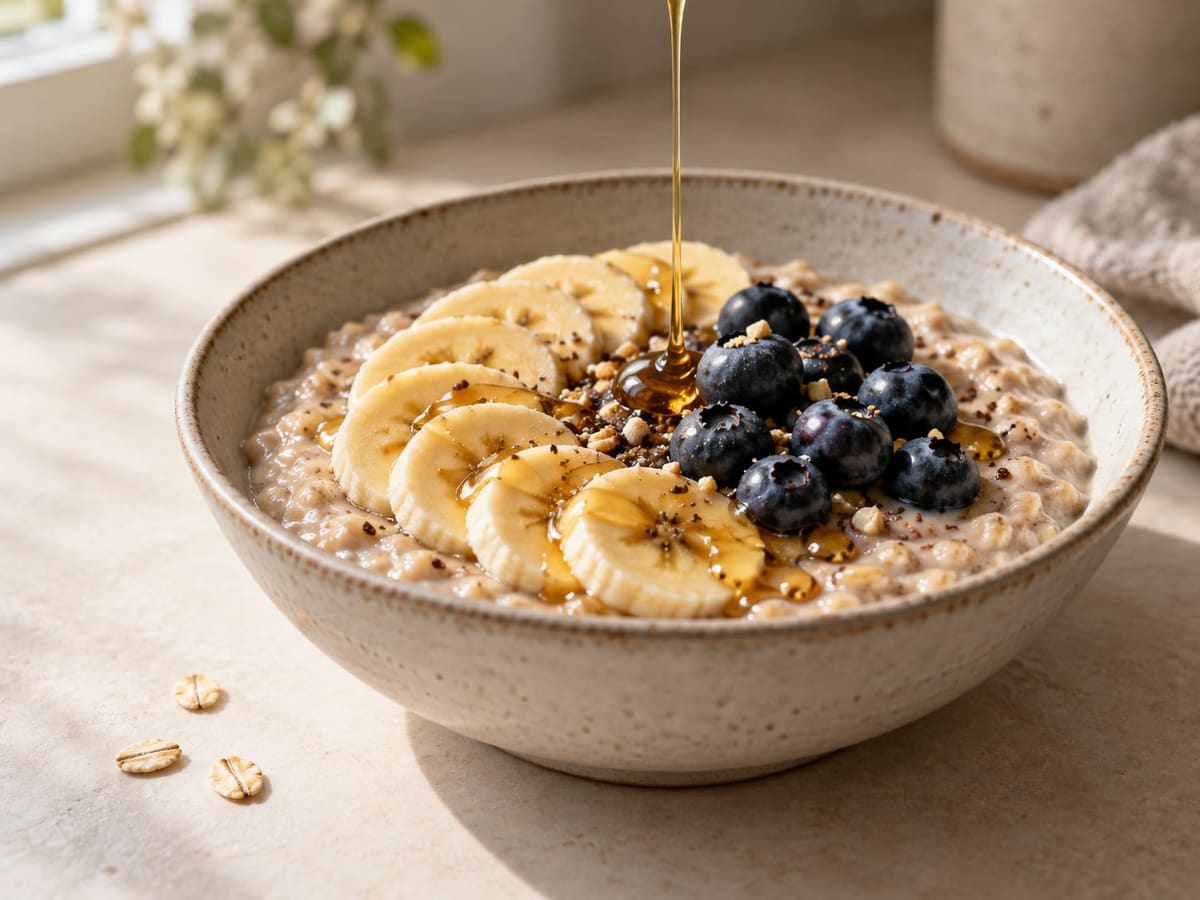
- Swap syrup for a mashed banana or defrosted frozen berries, which bring sweetness with some bulk and fibre.
- Use cinnamon and a pinch of salt. Neither does anything metabolically interesting, but they both make an unsweetened bowl taste finished.
- Keep nuts and seeds as a teaspoon-scale garnish rather than a handful.
If you have coeliac disease, buy oats labelled gluten-free, since ordinary oats are usually contaminated in milling. If oats specifically give you bloating and wind, that is worth noticing too; they contain fructans, which are a common trigger in irritable bowel syndrome and worth discussing with a dietitian rather than self-diagnosing.
Otherwise the verdict is dull. Porridge is fine. Weigh it, put some protein in it, and stop reading about it.
Make the bowl yours
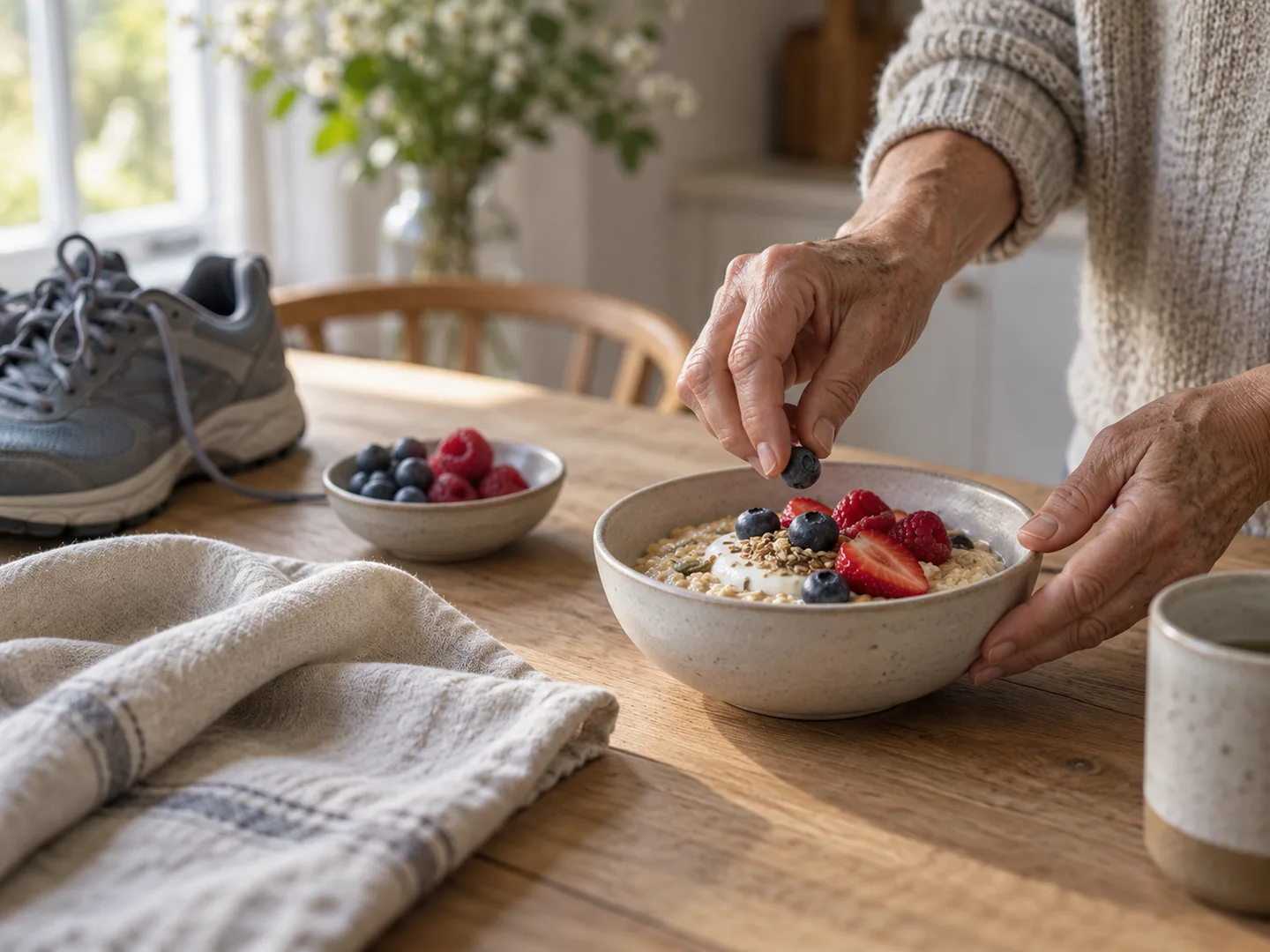
The American Heart Association describes oats as a source of soluble fibre and suggests simple oatmeal breakfasts with fruit and yoghurt. That does not mean every bowl is equally filling or that oats alone decide body weight. The portion you enjoy, the toppings and what else you eat through the day all matter. A banana, berries, nuts, seeds or yoghurt can each change flavour and satisfaction without a rule that one combination is the only healthy one.
If you are hungry soon afterwards, try a more substantial serving or a protein-containing side before blaming the carbohydrate. Our hunger guide looks at the full meal, and our fibre explainer shows how oats fit into a varied pattern. If you manage diabetes, use your own care plan to decide how a bowl fits your meals. The useful experiment is to find a breakfast you enjoy and that supports your morning, not to label porridge a weight-loss trick.
Sources
- Take a fresh look at oatmeal. American Heart Association.
- How to Make Breakfast a Healthy Habit. American Heart Association.
- How to get more fibre into your diet. NHS.
Pass it on
XBlueskyEmail