How much exercise do you actually need?
The weekly guidelines explained in real-life minutes, with a starting point for people who are not there yet.
 Camila3 min read
In this article
A fitness watch can make an ordinary week look like a series of missed targets. Public-health advice is more flexible than that screen. For adults, the broad aim is regular aerobic movement plus some activity that strengthens muscles. The amount can be accumulated across a week; it does not have to come from a perfect gym schedule. If you currently do little, the first useful increase may be far smaller than the headline number. The best plan is one you can recover from and repeat.
What the weekly guidance says
WHO recommends 150 to 300 minutes of moderate aerobic activity in a week for substantial health benefits, or a smaller amount of vigorous activity, together with muscle-strengthening activity. CDC describes 150 minutes and two strength days as a useful adult baseline. Moderate activity means an effort that raises your breathing while still allowing conversation; a brisk walk can count. Vigorous activity feels harder. These are population guidelines, not a pass/fail threshold for an individual Tuesday.
The minutes can be broken up. A walk after lunch, a cycle to a shop and active household tasks may all contribute when the effort is sufficient. There is no requirement that movement wear sports clothing to be real. Our walking-versus-running guide explains why choosing the activity you can keep doing matters. If walking is accessible and enjoyable, it is a serious option. If you like running, build it gradually. Neither has to defeat the other.
The two strength days are often forgotten
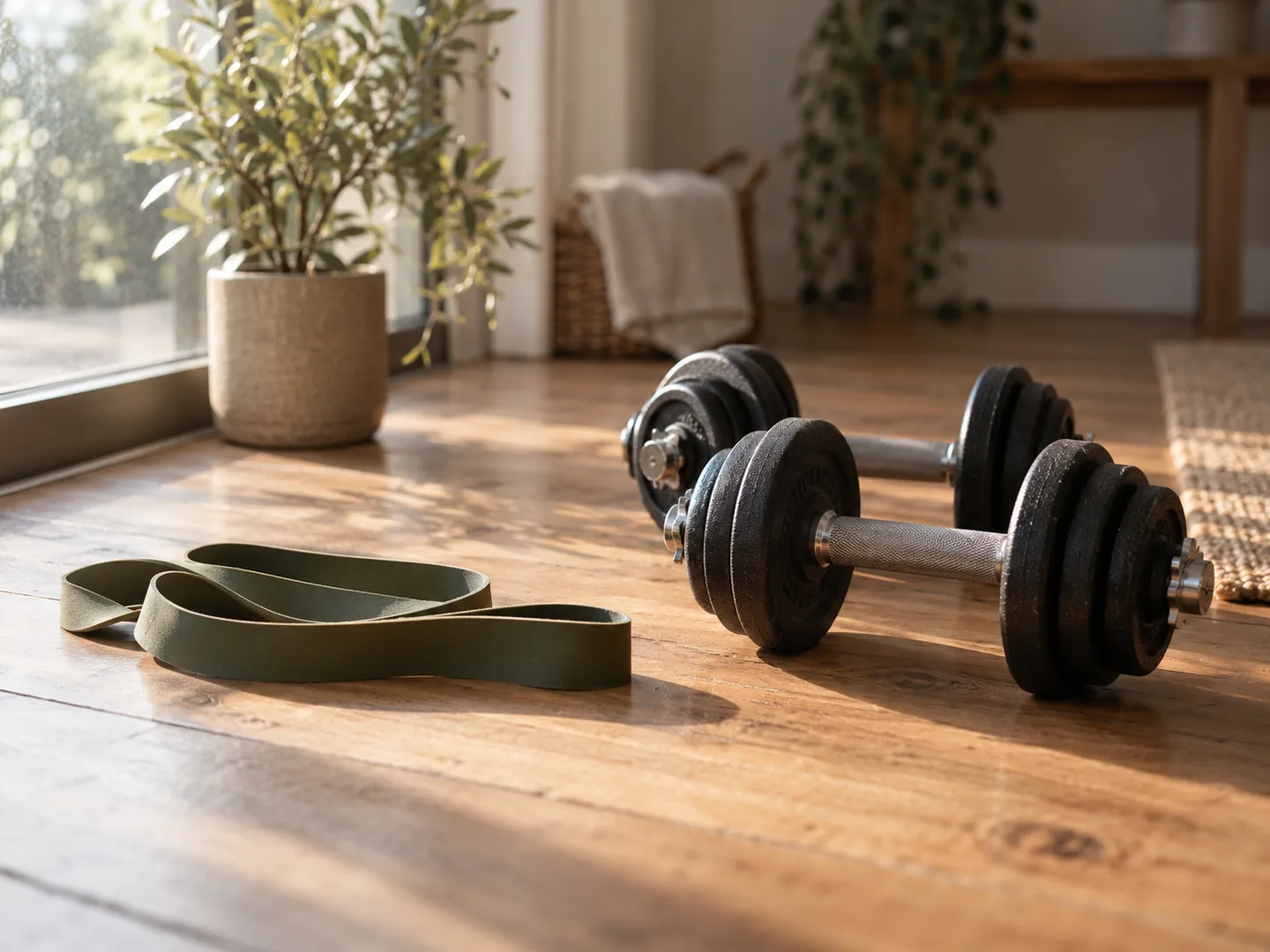
Strength activity challenges major muscle groups. It can use body weight, resistance bands, machines or weights. It helps with function and does not require a gym membership. ACSM's recent guidance emphasises consistency and notes that home-based approaches can be effective. Two short, manageable sessions may be easier to start than a complicated split routine. Our beginner strength guide shows one way to arrange them. Leave room to learn the movements, and increase the challenge gradually.
A hard workout that leaves you unable to repeat it for two weeks is less useful than a smaller one you can build on. Muscles and joints need time to adapt, particularly if you have been inactive. A coach or physiotherapist can help with technique and modifications. If you have pain, dizziness or a medical concern, seek individual advice rather than pushing through to satisfy a watch. Strength is about being able to do more in daily life, not only about how much weight is on a bar.
Start below the target if you need to
The CDC explicitly says that some physical activity is better than none. That matters if 150 minutes currently sounds impossible. Choose a repeatable starting point—perhaps ten minutes after lunch three days this week—and make that your first commitment. Once it feels ordinary, add another walk or extend one session. You do not need to make up every missed minute. An activity you dislike is difficult to sustain, so try options that fit your surroundings and abilities.
Life constraints count. Caring responsibilities, disability, shift work, safety and access to space all shape what is possible. The right plan can change across seasons. Someone who cannot walk comfortably might use a chair-based routine, swimming or another adapted activity. People with chronic conditions may benefit from movement too, but should discuss suitable types and amounts with a clinician when uncertain. The public guideline is a map; individual care tells you how to travel it.
A week you can actually plan
Write down three realistic movement slots rather than an idealised seven-day schedule. One might be a walk; one might be a short strength session; the third can be whatever you enjoy. Put the shoes or band where you can see them, and make a backup plan for bad weather or a long workday. At the end of the week, review what happened without scoring yourself as good or bad. The goal is a pattern that survives ordinary life. Increase the amount when your current week feels manageable, not because an app demands a perfect streak.
If one session disappears, keep the next one. Missed time is not a debt to repay with an unusually hard workout. Think in months rather than streaks: a few small sessions repeated across many weeks can build a reliable base. Rest and adaptation belong in that plan too, especially while you are learning a new activity.
Sources
- WHO guidelines on physical activity and sedentary behaviour. World Health Organization.
- Adding Physical Activity as an Adult. CDC.
- Resistance Training Guidelines Update. American College of Sports Medicine.
Pass it on
XBlueskyEmail